From Co-op to Career: Building a Future at ARC
September 15, 2026
At ARC, we believe a co-op or internship can be more than a temporary role. It can be an opportunity...
Read More


Today marks an important milestone for ARC.
We announced a $60 million growth investment from Acadia Investment Partners that will help us accelerate product innovation, expand our commercial capabilities, and bring ARC to more organizations across retail, grocery, airline, logistics, warehousing, and other frontline-intensive environments.
But the investment itself isn’t the most interesting part of the story.
The bigger story is the decades-old operational problem we’re solving–and why it has become increasingly important as frontline operations become more dependent on technology.
Walk into almost any modern retail store, grocery operation, warehouse, distribution center, or other frontline environment and you’ll see technology everywhere.
Handheld computers help workers locate inventory. Scanners enable picking and fulfillment. Mobile printers create labels. Radios connect teams. Smartphones, tablets, and other devices put information and capabilities directly into employees’ hands.
Enterprises have invested billions putting technology into the hands of frontline workers.
But many still lack an effective way to secure, charge, track, maintain, and optimize those devices at scale.
That’s the operational blind spot.
Who has each device? Where is it? Is it charged? Is it working? Is it actually being used? Why is one location ordering replacements while another has devices sitting idle? How much time are managers and employees spending searching for, replacing, and troubleshooting equipment?
When organizations can’t answer those questions, the costs compound quickly.
A missing scanner at one store doesn’t sound like a strategic business problem.
Neither does an employee spending a few minutes looking for a charged handheld at the beginning of a shift.
But enterprise scale changes the math.
Multiply those moments across thousands of employees, hundreds of locations, millions of shifts, and large fleets of increasingly important technology.
The result is lost and damaged equipment. Excess inventory purchased as backup. Underutilized assets. Employee downtime. Manager time spent administering devices instead of managing operations. And capital being deployed without enough insight into whether existing technology is being fully utilized.
These aren’t isolated device problems.
They’re upstream operational problems that affect productivity, cost, and the return enterprises get from their technology investments.
That’s the gap ARC was built to close.
We learned this problem firsthand.
Our decade of consumer-facing experience with ChargeItSpot taught us what happens when technology has to perform in unpredictable, fast-moving, real-world environments.
It also taught us that solving the device itself isn’t enough.
If a device isn’t charged, available, accounted for, maintained, and in the right worker’s hands when it’s needed, it can’t deliver the productivity gains it was purchased to create.
That insight ultimately led to ARC.
And the growth of the platform demonstrates just how significant the need has become.
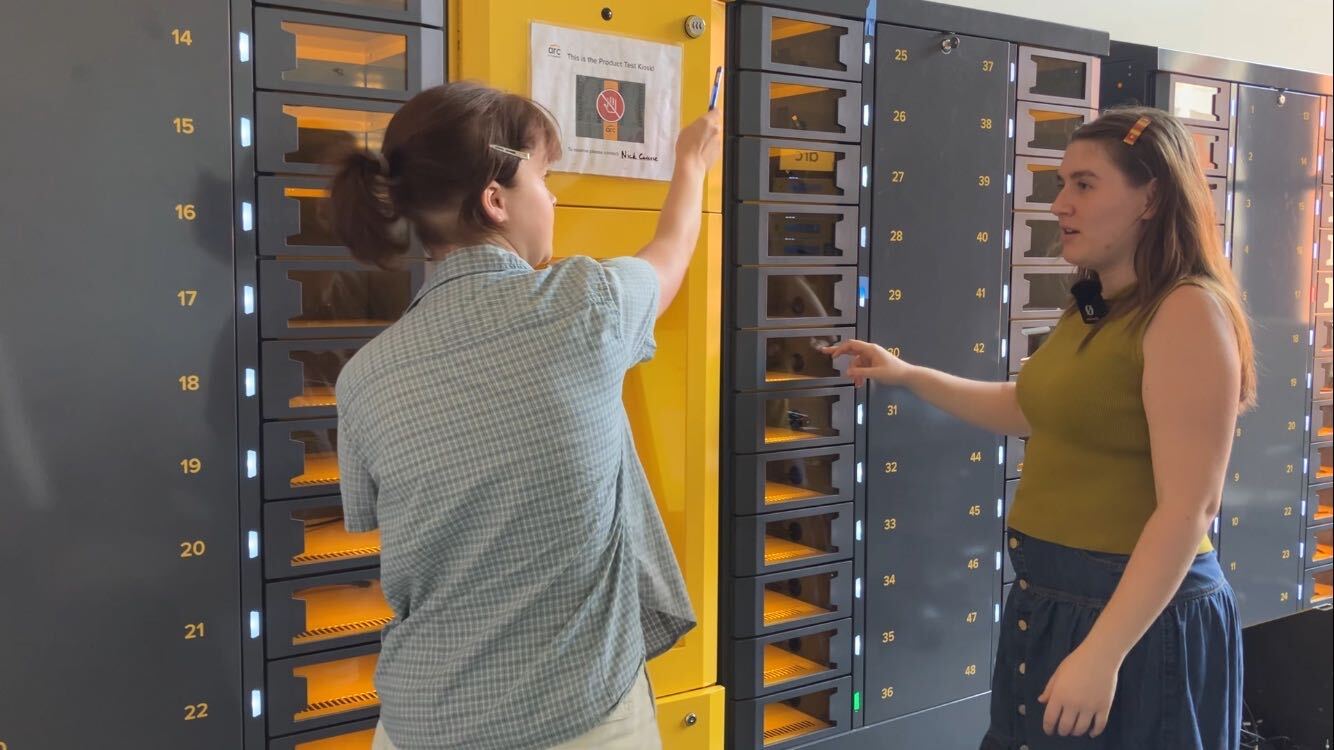
ARC combines intelligent, self-service device storage with cloud-based software and data intelligence to help enterprises manage the technology powering their frontline workforce.
At the most basic level, ARC helps organizations answer a deceptively simple question:
Where is every device, and is it ready to work?
ARC creates 1:1 device accountability, intelligently distributes the most-charged device to each associate, and provides real-time visibility into device health, availability, and utilization.
But the opportunity goes well beyond device management.
Across enterprise deployments, ARC turns millions of device data points into actionable operational intelligence.
That allows organizations to better understand how their technology is being used, identify opportunities to improve utilization, reduce unnecessary inventory and replacement spending, and make better decisions about their frontline technology investments.
Analysis across ARC deployments has shown:
Together, those numbers demonstrate what can happen when enterprises solve the upstream issues surrounding frontline technology.
Managers get time back to focus on higher-value work. Employees have greater access to the tools they need to do their jobs. Organizations reduce waste and get more value from the technology they already own.
And frontline technology starts working the way it was intended to work: amplifying the output of every employee rather than creating another operational challenge to manage.
Frontline operations are becoming more technology-dependent, not less.
Retailers rely on handheld technology for inventory, fulfillment, customer service, communication, and loss prevention. Warehouses and distribution centers are increasingly connected. Airlines and logistics organizations depend on mobile technology to keep complex operations moving.
As more technology reaches the frontline, effectively managing that technology becomes increasingly mission-critical.
Enterprises don’t simply need more devices.
They need the infrastructure and intelligence to ensure the technology they already own is available, accountable, working, and being used effectively.
That’s why we believe frontline technology management is becoming a critical enterprise operational discipline.
Our $60 million growth investment from Acadia Investment Partners gives us additional resources to accelerate that vision.
We’ll invest further in product development and innovation, scale our operational resources, expand our commercial capabilities, and extend ARC into additional frontline-intensive industries.
We’ll also continue working closely with customers to identify the operational challenges that better infrastructure, data, and intelligence can solve.
As part of the investment, Acadia’s Harsh Agarwal and Peter Schmitt will join ARC’s Board of Directors, bringing deep experience in scaling high-growth technology businesses and supporting companies through their next stages of expansion.
ARC started by solving a deceptively simple problem: helping frontline workers get the technology they need, ready to perform when they need it.
Solving that problem has revealed a much larger opportunity.
Once enterprises can see and understand what’s happening across their device fleets, they can make smarter decisions about utilization, inventory, labor, capital investment, and frontline operations.
We’re not simply building a better way to store devices.
We’re building the technology platform that powers the frontline workforce.
The investment from Acadia gives us the resources to accelerate that vision–helping more organizations reduce waste, improve productivity, and get significantly more value from the technology they already own.
And we’re just getting started.
Ready to see what ARC could unlock across your operations?
See ARC in action: https://learn.experiencearc.com/